

Lower Eyelid Surgery
Addressing under eye bags, excess skin and age related changes of the lower eyelids to create a smoother transition between the lower eyelid and cheek while preserving the natural eye shape.
The lower eyelid changes over time on several levels. The skin can lose elasticity, fat tissue from the eye socket can protrude more, and the transition between the lower eyelid and the cheek can become more visible. At the same time, volume loss and changes to the deeper structures can reinforce the appearance of shadows, under-eye bags, or a tired-looking eye area.
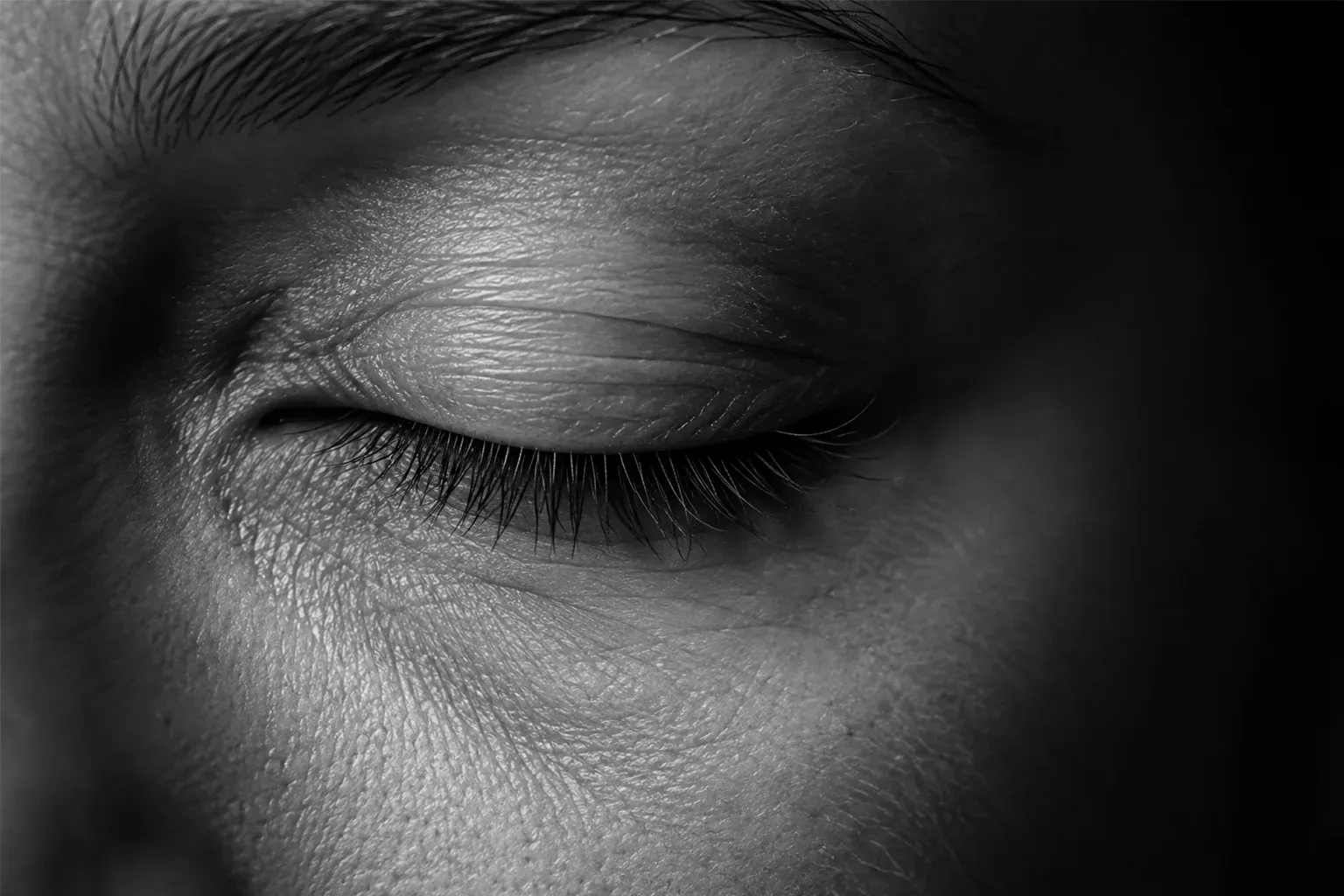
A lower eyelid lift therefore does not address excess skin or visible under-eye bags alone. What matters is understanding which anatomical changes are responsible for the appearance, and how they relate to one another.
The aim is not to tighten the lower eyelid as much as possible, or to remove every visible fat pad. The goal is a calmer, more harmonious transition between the eye and the cheek, without changing the natural eye shape or personal expression.
At Clinic Selnau in Zürich, we plan lower eyelid lifts with particular attention to eyelid stability, fat distribution, skin quality, and the interplay between the lower eyelid and the midface.
Our Approach
Every eye area is different.
Eye shape, bone structure, skin quality, fat distribution and cheek position together determine how the lower eyelid is perceived.
For this reason, planning a lower eyelid lift does not begin with the question of how much skin or fat can be removed. Instead, we look at which structures are causing the visible change.
For some people, protruding fat pads are the main concern. For others, excess skin, volume loss, or a pronounced transition between the lower eyelid and cheek are more decisive. Several of these changes can also exist at the same time.
Treatment is therefore guided by individual anatomy rather than a standardised procedure.
Lower Eyelid, Under-Eye Bags & Midface
The lower eyelid cannot be fully separated from the cheek anatomically.
Protruding fat tissue can create under-eye bags, while volume loss or changes in the midface can further emphasise the transition between the lower eyelid and the cheek. This creates shadows and contours that make the gaze appear more tired.
A lower eyelid lift may be considered for changes including:
- Visible or pronounced under-eye bags
- Protruding fat tissue on the lower eyelid
- Excess skin or fine wrinkling
- A pronounced transition between the lower eyelid and cheek
- Age-related changes to the lower eye area
- Asymmetry between the two lower eyelids
- A tired-looking eye area despite adequate rest
- A combination of skin, fat and volume changes
Not every shadow under the eyes, however, is an under-eye bag, and not every hollow results from missing volume. For this reason, it is essential to first determine the anatomical cause of the visible change.
Planning & Analysis
Careful analysis is especially important for a lower eyelid lift.
During consultation, we examine your lower eyelids from different perspectives and assess skin quality, fat distribution, eyelid tension, and the relationship between the lower eyelid and cheek.
The position of the eye within the bony eye socket and the natural shape of the lid margin also influence planning.
At the same time, we consider the midface. Volume loss or descended tissue structures in the cheek area can significantly contribute to a more visible transition to the lower eyelid.
Standardised photography supports this analysis and helps us discuss the starting point and treatment goal together.
On this basis, we determine which structures should be treated and which surgical approach is suited to that.
The Procedure
There is no single lower eyelid lift for every eye area.
Which technique is used depends on whether fat tissue, excess skin, changes in eyelid stability, or a combination of these factors is the primary concern.
Protruding fat tissue does not always need to simply be removed. In suitable cases, it can be reduced in a targeted way or redistributed to create a smoother transition between the lower eyelid and the cheek.
Where relevant excess skin is also present, this can be carefully corrected.
A restrained approach to skin and fat tissue is essential. Removing too much can alter the natural support of the lower eyelid or make the eye area appear hollow.
The aim, therefore, is not maximum reduction. It is to treat the different structures in a way that creates a calmer transition while preserving the natural shape of the eye.
Transconjunctival or Through the Skin?
A lower eyelid lift can be performed through different surgical approaches.
In the transconjunctival approach, the incision is made on the inner surface of the lower eyelid. This leaves no external skin scar. This approach can be particularly useful when protruding fat tissue is the main concern and no significant excess skin is present.
Where additional skin needs to be removed or certain structures need to be treated externally, an approach just below the lash line may be more appropriate. The incision is planned so that the resulting scar sits as inconspicuously as possible along the natural structures of the lower eyelid.
Neither approach is inherently better. The choice depends on which anatomical changes are present, and which structures need to be treated for a stable, natural result. It is not the surgical approach itself that determines the quality of a lower eyelid lift. What matters is whether it suits the anatomy and the treatment goal.
Removing Fat or Redistributing It?
Under-eye bags often result from fat tissue that protrudes more from the eye socket.
In the past, this fat was often simply removed. Today, a more differentiated assessment is made as to whether reduction actually makes sense, or whether existing fat should be partially preserved and redistributed instead.
The reason lies in the overall shape of the eye area. If too much fat is removed, the lower eyelid can appear hollow over time. At the same time, a hollow between the lower eyelid and cheek can remain, or even become more visible.
In suitable situations, existing fat can therefore be used to smooth out this transition. Where volume loss in the midface is also present, a facial fat transfer can offer an additional option.
The aim is not to remove as much fat as possible. It is to preserve or place volume exactly where it is needed for a natural transition.
Eyelid Stability & Eye Shape
The natural position of the lower eyelid is essential to the shape and function of the eye area.
The lower eyelid needs to be sufficiently stable and sit closely against the eye. Skin quality, tissue tension and the anatomical support of the outer eyelid corner, however, can vary individually.
For this reason, eyelid stability is assessed before surgery. Where reduced stability is present, or where additional support makes sense given the planned correction, stabilising the lower eyelid can become part of the procedure.
This aspect matters particularly because a lower eyelid lift affects more than the appearance of the skin. Excessive tension or insufficient support can influence the natural position of the lower eyelid, and with it, the shape of the eye.
The aim, therefore, is to correct changes while respecting the natural eyelid position.
Upper and Lower Eyelid as One Unit
The upper and lower eyelids together shape the eye area, yet they change differently.
The upper eyelid is often primarily affected by excess skin. The lower eyelid, by contrast, is more strongly influenced by fat distribution, eyelid stability, and the transition to the midface.
Where changes exist in both eyelids, an upper and a lower eyelid lift can be planned together.
Brow position also influences the overall expression of the eye area. Where the brows have descended, a brow lift, or for more extensive changes in the upper face, a forehead lift, can be assessed independently.
Not every change around the eye, however, should be treated at the same time. What matters is which structures actually contribute to the disruptive appearance.
Complementary Treatments
The transition between the lower eyelid and the cheek is part of the midface.
Where tissue structures in the mid and lower face have descended significantly, a facelift can represent a different treatment approach. A lower eyelid lift cannot replace these deeper changes.
Regenerative methods, too, can support skin and tissue quality where the starting point is suitable, for example with biostimulators or more broadly under Regenerative Facial Rejuvenation.
Combining different treatments is not automatically necessary. What matters is whether skin, fat, volume or tissue position is responsible for the visible change.
The Transition Matters Most
A natural lower eyelid lift does not end at the lower edge of the eyelid.
What matters is how the lower eyelid transitions into the cheek. If under-eye bags are treated in isolation, without considering volume distribution and the midface, the fat pad may become smaller, but the transition to the cheek can remain clearly visible.
For this reason, we consider the lower eye area as a connected anatomical region.
The aim is not a completely smooth or contourless lower eyelid. It is to reduce disruptive changes while preserving the natural transitions that give the eye its individual shape.
A successful lower eyelid lift does not change the eye. It calms the transition to the cheek.
Healing & Results
Swelling and bruising are normal in the first period after a lower eyelid lift.
Both sides may respond differently, particularly during the early healing phase. The shape of the lower eyelid, too, can temporarily feel unfamiliar as swelling subsides and the tissue stabilises.
As healing progresses, the transition between the lower eyelid and the cheek becomes clearer, and the result appears more natural.
With an external approach, the fine scar below the lash line also changes over several months and becomes increasingly inconspicuous. With a purely transconjunctival approach, no external skin scar results.
How quickly the final result develops depends on the extent of the procedure, skin and tissue quality, and individual healing response.
The natural ageing process continues even after a lower eyelid lift. The aim, therefore, is not a permanently fixed state, but a balanced correction that can continue to develop naturally with the eye area and the face.
Consultation
A lower eyelid lift begins with the question of which anatomical changes lie behind under-eye bags, shadows, or an unsettled transition to the cheek.
During your consultation at Clinic Selnau in Zürich, we assess your lower eyelids, skin quality, fat distribution and eyelid stability. At the same time, we consider the cheeks, midface and the eye area as a whole.
We discuss which changes concern you, and which of these can meaningfully be addressed through a lower eyelid lift.
On this basis, we decide whether a transconjunctival or external approach makes sense, whether fat tissue should be reduced or redistributed, and whether further structures need to be considered.
We discuss openly what result can realistically be expected, which surgical approach makes sense, how the healing phase unfolds, and what limitations and risks need to be considered.
The aim is not to redefine the shape of the eye. It is to treat the structures of the lower eyelid so that the eye area appears calmer and more rested, while your personal expression is preserved.