

Brow Lift
Repositioning descended brows to restore a more balanced position, with careful attention to the natural proportions of the eyes and upper face.
Brow position has a significant influence on the expression of the eyes and the proportions of the upper face. Over time, the forehead, skin and deeper tissue structures can change, causing the brows to sit lower and the eye area to appear heavier or more tired.
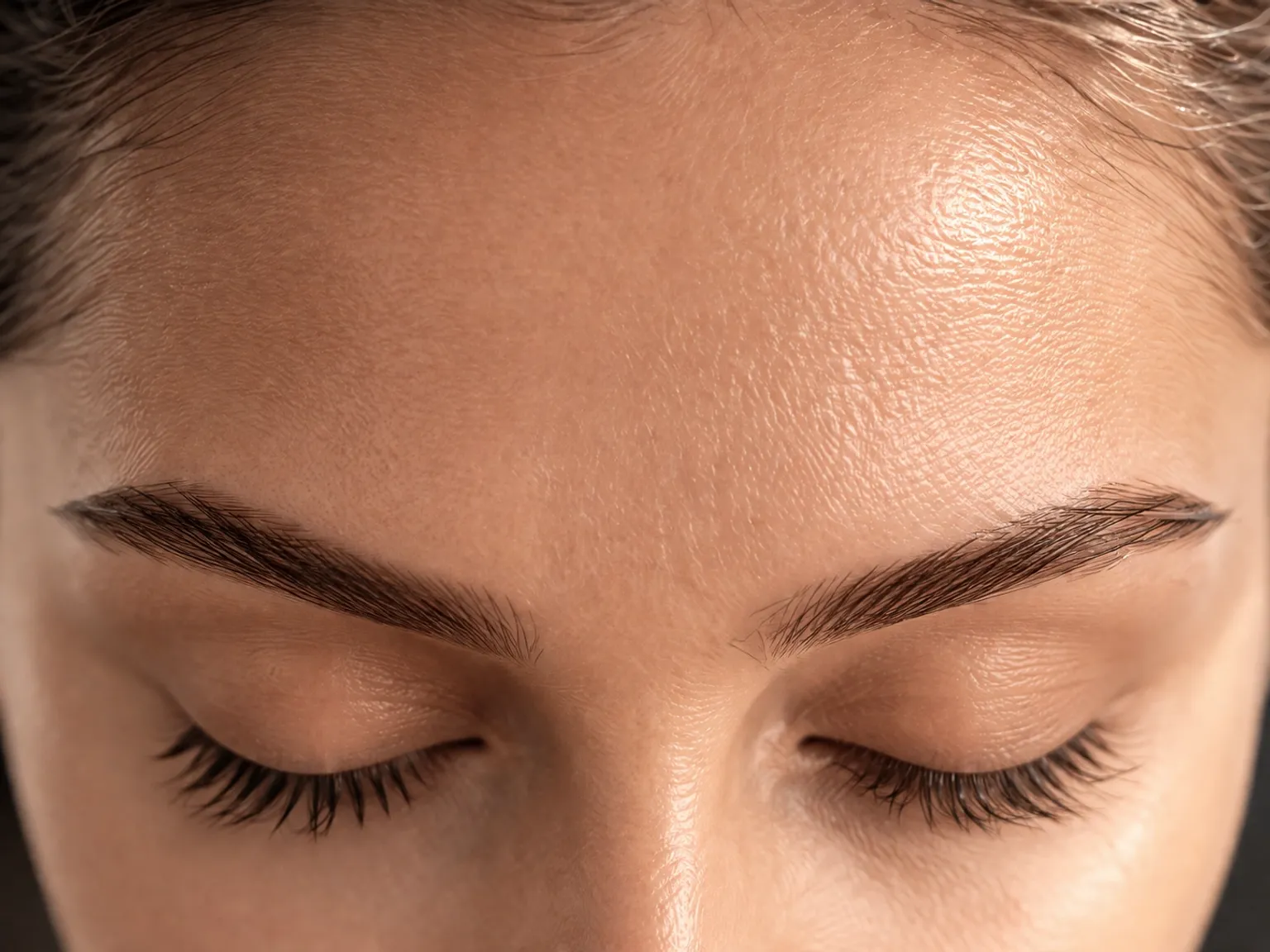
Not every brow descends evenly. Often it is particularly the outer portion that changes, while shape, height and asymmetry remain highly individual from person to person.
A brow lift therefore does not simply address brow height. What matters is understanding which part has shifted position, and how the brow, upper eyelid and forehead relate to one another.
At Clinic Selnau in Zürich, we plan brow lifts with particular attention to natural brow shape, the eye area, and preserving personal expression.
Our Approach
Every brow is different.
Shape, height, arch and relationship to the eye vary from face to face. Bone structure, forehead height, hairline and upper eyelid position also influence how the brows are perceived.
For this reason, planning a brow lift does not begin with an ideal brow position. Instead, we look at how your brows have changed relative to your natural anatomy, and which part of that change is actually responsible for your current expression.
For some people, mainly the outer portion of the brow sits lower. For others, the change affects the entire brow, or is closely connected to changes in the forehead.
The aim is not to create a new brow shape. It is to bring the existing shape into a position that once again sits harmoniously with the eye area.
Brow Position, Eyes & Expression
Even small changes in brow position can influence facial expression.
A descended brow can place additional pressure on the upper eyelid, reducing the visible eyelid surface. This can make the eye area, particularly on the outer side, appear heavier.
A brow lift may be considered for changes including:
- Descended brows
- A descended outer brow segment
- Asymmetric brow position
- A heavier-appearing upper eye area
- Reduced distance between the brow and upper eyelid
- Age-related changes to brow position
- Excess skin to the side above the eye, significantly influenced by brow position
- Changes to the upper face where targeted brow repositioning makes sense
Not every heavy-looking eye area, however, results from descended brows. Excess skin on the upper eyelid, natural eye shape and changes to the forehead can create a similar impression. For this reason, precise anatomical assessment is essential.
Planning & Analysis
Careful analysis is an essential part of planning.
During consultation, we examine the brows in their natural resting position and in relation to the eyes, upper eyelids and forehead.
We assess the shape, height and symmetry of both brows. At the same time, we consider forehead height, hairline, skin quality and the activity of the forehead muscles.
Existing asymmetries also play an important role. Brows are rarely perfectly symmetrical by nature and should not be brought into a standardised shape through surgery.
Standardised photography supports this analysis and helps us discuss the starting point and possible changes together.
On this basis, a treatment plan is developed that is guided by your natural brow shape and the anatomy of the upper face.
The Procedure
There is no single brow lift for every face.
Which technique makes sense depends on which part of the brow needs to be lifted, how pronounced the change is, and what anatomical conditions are present.
Depending on the starting point, the outer portion of the brow can be lifted in a targeted way, or a more comprehensive repositioning may be appropriate.
Forehead height, hairline and skin characteristics also influence the choice of surgical approach and the position of any incisions.
What matters here is not lifting the brow as high as possible. A brow that is too high or unnaturally shaped can significantly alter expression. For this reason, the extent of the correction is guided by the individual starting position and the natural proportions of the face.
Brow Lift or Upper Eyelid Lift?
A heavy upper eye area can have different causes.
In an upper eyelid lift, excess skin, and where relevant additional tissue, is treated directly at the upper eyelid. A brow lift, by contrast, addresses the position of the brow itself.
This distinction is essential. Where the brow has descended, it can push additional skin down onto the upper eyelid. If, in this situation, only skin is removed from the upper eyelid, the altered brow position remains unaddressed. Conversely, not every case of excess skin on the upper eyelid requires a brow lift.
For this reason, the brow and upper eyelid are always assessed together. In some situations, an upper eyelid lift alone is appropriate. In others, the brow lift is the primary focus, or both procedures can be combined.
It is not the amount of visible skin that determines treatment. What matters is where the change originates.
Brow Lift or Forehead Lift?
The brows and forehead form an anatomical unit, but they are not the same treatment area.
A brow lift focuses specifically on the position and shape of the brows. A forehead lift, by contrast, can be appropriate when changes affect the upper face more broadly, and the forehead needs to be considered alongside brow position.
The boundary between the two procedures is fluid. Depending on the technique and starting point, treating the forehead can simultaneously influence brow position.
For this reason, it is not the name of the procedure that matters. What matters is which structures need to be treated to bring the upper face into harmonious balance.
Complementary Treatments
The brows are part of the eye area as a whole.
Where excess skin is also present on the upper eyelid, an upper eyelid lift can be appropriate. Changes to the lower eyelid, under-eye bags, or a pronounced transition between the lower eyelid and cheek are assessed as part of a lower eyelid lift.
Where the change affects the forehead and upper face more broadly, a forehead lift can be an alternative or complement.
For a temporary, non-surgical effect, botulinum toxin can also relax the muscles that pull the brow downward, though the result is neither as pronounced nor as lasting as a surgical lift.
Volume loss in the temples or midface can exist independently of brow position. In suitable situations, a fat transfer to the face can be used to address such changes.
For more extensive changes to the cheeks, jawline or neck, a facelift or neck lift pursue different anatomical goals.
Combining several procedures is not automatically necessary. What matters is which changes genuinely belong together.
Position, Not Height
The ideal brow cannot be defined by a fixed height.
Its position depends on eye shape, forehead, bone structure and the individual proportions of the face. Differences between female and male faces, as well as personal anatomical features, also play a role.
For this reason, the highest possible brow is not the aim of a brow lift. Excessive lifting can make an expression appear surprised or unnaturally altered. Likewise, an overly changed brow shape can distort the characteristic eye area.
The aim is to reposition the brow where it once again belongs naturally to the face.
A successful brow lift does not simply lift the brow. It brings it into balanced proportion with the eyes, forehead and face.
Healing & Results
Swelling and bruising are normal in the first period after a brow lift.
Depending on the technique, these can occur particularly around the forehead and eye area, and may shift somewhat lower in the first few days.
In the early healing phase, brow position can initially appear higher or unfamiliar. As swelling decreases and the tissue relaxes, the result develops gradually.
Any scars, too, change over several months and become increasingly inconspicuous.
How quickly the final result develops depends on the technique used, the extent of the procedure, and individual healing response.
A brow lift does not stop the natural ageing process. The forehead, skin and tissue will continue to change after surgery.
The aim is a balanced brow position that fits naturally into the upper face.
Consultation
A brow lift begins with the question of how much your brow position contributes to the current expression of your eye area.
During your consultation at Clinic Selnau in Zürich, we assess the shape, height and symmetry of your brows. At the same time, we consider the upper eyelids, forehead, hairline and the upper face as a whole.
We discuss which changes concern you, and whether they genuinely result from altered brow position.
On this basis, we assess whether a brow lift makes sense, whether an upper eyelid lift or forehead lift would better address the underlying change, or whether a combination of approaches may be appropriate.
We discuss openly what result can realistically be expected, which surgical approach makes sense, how the healing phase unfolds, and what limitations and risks need to be considered.
The aim is not to lift the brows as high as possible. It is to change their position so that the eye area appears more open, while your natural expression is preserved.