

Abdominoplasty
Reshaping the abdomen by removing excess skin and, where needed, restoring the underlying abdominal wall for a firmer, more defined contour.
The shape of the abdomen is not determined by fat tissue alone.
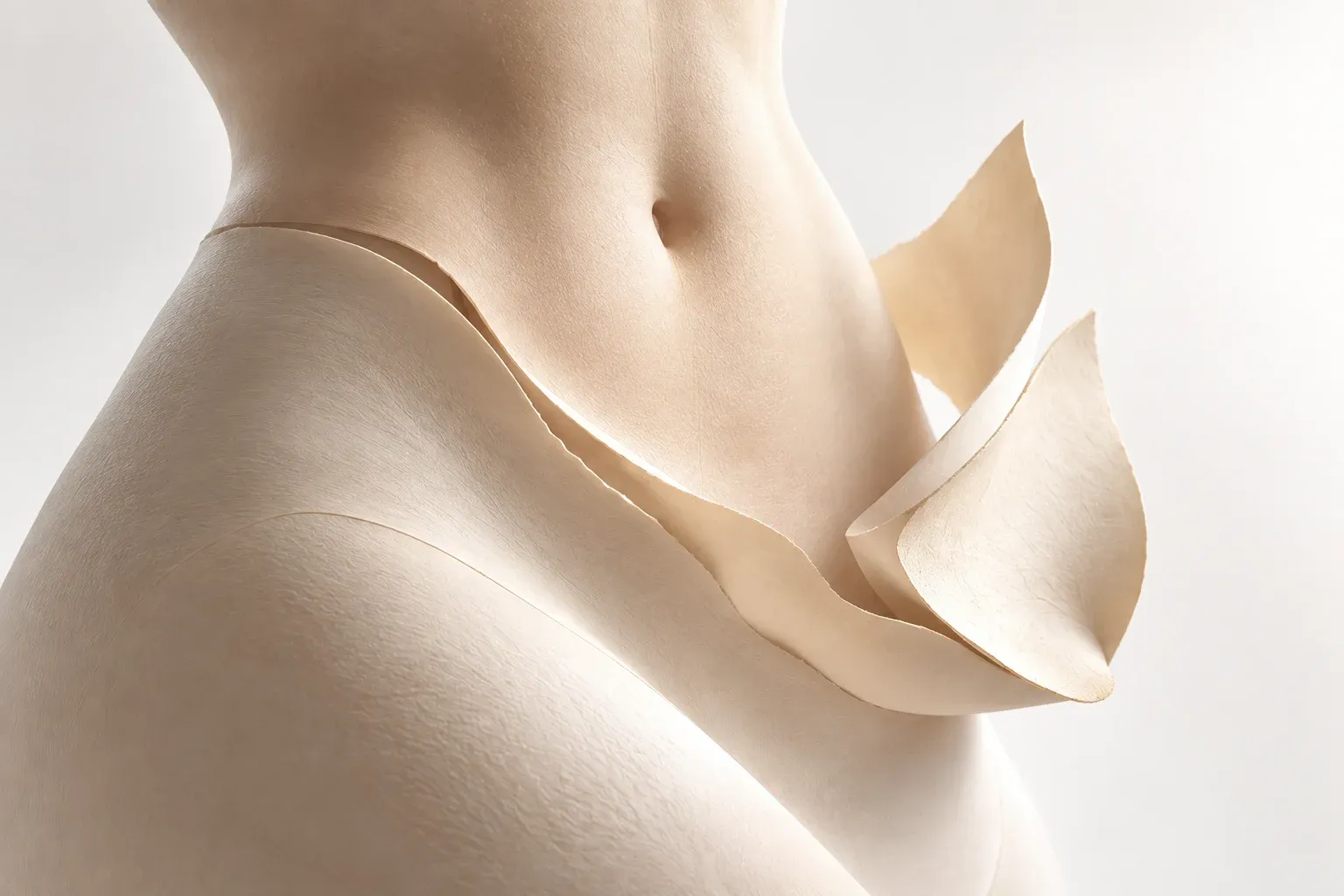
Skin, subcutaneous fat, muscle and the underlying abdominal wall together act on the contour. Pregnancies, significant weight changes and the natural loss of skin elasticity can permanently change these structures.
Excess skin often does not fully retract through exercise or weight loss. A stretched abdominal wall, too, can persist despite training.
An abdominoplasty, medically known as a tummy tuck, makes it possible to remove excess skin and reshape the contour of the abdomen. Depending on the starting point, the procedure can be combined with liposuction, and the abdominal wall can additionally be stabilised.
At Clinic Selnau in Zürich, planning therefore begins with the question of which anatomical structures are responsible for the changed abdominal contour.
Our Approach
Every abdomen is different.
Skin quality, fat distribution, the abdominal wall, body build and existing scars together determine the starting point.
For this reason, planning an abdominoplasty does not begin with a particular surgical technique. We first consider whether mainly excess skin, localised fat tissue, a change to the abdominal wall, or a combination of these factors is present.
This distinction is essential. Liposuction can reduce fat tissue, but cannot remove excess skin. An abdominoplasty can reshape skin and tissue, but is not intended as a method of general weight reduction.
The aim is not the flattest possible abdomen. It is to treat the structures that are changing the natural contour, and to create a balanced relationship between the abdomen, waist and the rest of the body.
Skin, Fat & Abdominal Wall
A similar abdominal shape can have different anatomical causes.
Following pregnancy, for example, excess skin can be combined with a stretched abdominal wall. Following significant weight loss, excess skin is often the primary concern. In other people, mainly a localised fat deposit exists with good skin quality.
An abdominoplasty may be considered for changes including:
- Excess or lax abdominal skin
- Excess skin following pregnancy
- Excess skin following significant weight loss
- Pronounced skin folds in the lower abdomen
- Changes to abdominal contour despite a stable body weight
- A combination of excess skin and localised fat tissue
- Changes to the abdominal wall following pregnancy
- Rectus diastasis
- Asymmetries of the abdominal contour
- Changes or tension caused by existing scars
Not every one of these changes requires the same procedure. For this reason, it is first clarified which anatomical level needs to be treated.
Planning & Analysis
A careful analysis forms the basis of every abdominoplasty.
During consultation, we assess skin quality, excess skin and fat distribution, as well as the entire contour of the abdomen, waist and flanks.
The abdominal wall, too, is examined. We pay particular attention to whether rectus diastasis or another change to the muscular abdominal wall is present.
Previous pregnancies, weight changes, operations and existing scars are also taken into account.
Weight stability is equally important. An abdominoplasty should ideally be planned at a weight that can be maintained long-term. Larger future weight changes or pregnancies can influence the result again.
On this basis, we decide which form of abdominoplasty makes sense, and whether additional techniques are necessary.
The Procedure
In an abdominoplasty, excess skin in the abdominal area is removed, and the remaining tissue is retensioned and repositioned.
The necessary skin incision is planned as low as possible on the lower abdomen, so that the resulting scar can typically be concealed by underwear or swimwear. How long the scar needs to be depends significantly on how much excess skin is present.
In a full abdominoplasty, the navel is often also newly embedded into the tightened abdominal skin. Its anatomical connection to the abdominal wall is preserved.
Where a relevant change to the abdominal wall is also present, this can be stabilised during the same operation.
Localised fat deposits at the abdomen, waist or flanks can, depending on the starting point, additionally be treated with liposuction. The operation is therefore planned not only according to the amount of excess skin, but according to the entire contour of the torso.
Rectus Diastasis & Abdominal Wall
Particularly following pregnancy, the straight abdominal muscles can separate from one another. This change is referred to as rectus diastasis.
It is not simply excess fat or weak muscles. The anatomical connection between the muscle strands is widened, which can change the contour of the abdominal wall.
Training can improve the function of the core muscles, but cannot always fully correct a pronounced structural change.
Where a relevant rectus diastasis is identified as part of an abdominoplasty, the abdominal wall can additionally be stabilised, depending on the findings. This means not only the skin is treated, but the underlying structure is also considered.
Not every patient with excess skin, however, needs correction of the abdominal wall. The decision is guided by the individual findings.
Abdominoplasty or Liposuction?
One of the most important questions is whether the abdominal contour is mainly changed by fat tissue or excess skin.
Where a localised fat deposit exists with good skin elasticity, liposuction may be sufficient. Fat tissue is reduced in a targeted way, without removing skin. Where significant excess skin exists, however, liposuction alone cannot tighten it. In some situations, reducing the underlying fat volume can even make existing excess skin more visible.
In this case, an abdominoplasty is the more suitable treatment. Both changes often exist at the same time. In these cases, abdominoplasty and liposuction can be combined.
It is not the visible volume that decides the treatment. What matters is whether skin, fat tissue, the abdominal wall, or several of these structures are changing the contour.
Abdominoplasty with Liposuction
The abdomen and waist form a connected body contour.
For this reason, it can make sense to combine an abdominoplasty with liposuction of selected regions. While the abdominoplasty removes excess skin and reshapes the front abdomen, liposuction can, for example, reduce fat deposits at the waist or flanks.
This allows the transitions between the abdomen and adjacent body regions to be considered more precisely. An additional liposuction, however, is not automatically part of every abdominoplasty. Whether it makes sense depends on fat distribution, skin quality, tissue blood supply, and the extent of the overall procedure.
Mini or Full Abdominoplasty?
Not every case of excess skin affects the entire abdomen.
Where the change is mainly limited to the area below the navel, a smaller abdominoplasty can be considered in selected situations. In a so-called mini-abdominoplasty, mainly the lower abdomen is treated.
Where pronounced excess skin exists both above and below the navel, however, a full abdominoplasty is often necessary. In this case, the navel can be repositioned within the tightened skin.
The smaller operation is not automatically the better treatment. A mini-abdominoplasty can only achieve a good result where the existing anatomy actually suits its more limited treatment area. It is not the size of the procedure that determines its quality. What matters is which operation fully and meaningfully addresses the existing changes.
Following Pregnancy
Pregnancies can change skin, fat distribution and the abdominal wall at the same time.
The skin can lose elasticity, stretch marks can develop, and the straight abdominal muscles can separate. These changes retract to differing degrees after pregnancy.
Where, despite a stable weight and sufficient recovery time, relevant excess skin or a change to the abdominal wall remains, an abdominoplasty can make sense. Where localised fat deposits also exist at the abdomen, waist or flanks, liposuction can be used in addition.
Where changes to the breast are also to be treated, a breast lift / mastopexy, breast augmentation, implant exchange or implant removal can, depending on the starting point, form part of a more comprehensive treatment concept. Not all procedures need to, or should, be performed at the same time. Which combination makes medical sense depends on the extent of the individual operations and the individual health situation.
Following Weight Loss
Following significant weight reduction, fat volume can decrease substantially while excess skin remains.
The abdomen is often just one of several affected body regions. Excess skin can exist at the same time on the upper arms, thighs, hips, back or breast.
In these situations, an abdominoplasty can be part of a more comprehensive body contouring concept. Depending on the starting point, an arm lift, thigh lift, or other body-shaping procedures can additionally make sense. With more extensive changes, treatment in several surgical steps can be safer and more sensible than combining all regions in a single operation.
The Navel
The navel is a small anatomical detail with a significant influence on the appearance of the abdomen.
In a full abdominoplasty, the navel generally remains connected via its deeper anatomical attachment, while the surrounding abdominal skin is tightened downward. This requires a new opening to be created for the navel.
Position, shape and scar placement are planned so that the navel fits as naturally as possible into the new abdominal contour. A natural-looking navel is therefore an important part of surgical planning, not merely a technical detail.
Scars & Excess Skin
An abdominoplasty leaves a permanent scar on the lower abdomen.
Its length depends on how much excess skin needs to be removed. With pronounced excess skin, a longer scar can be necessary to adequately address lateral skin folds and tissue excess. A deliberately too-short scar can result in excess tissue remaining at its ends.
For this reason, scar length is not chosen independently of the treatment goal. Its position is planned as low as possible and adapted to the individual contour of the lower abdomen and hip. The shortest possible scar is not automatically the best result. What matters is the relationship between necessary skin reduction, scar position, and the resulting body contour.
Contour, Not a Flat Abdomen
A completely flat abdomen is not a meaningful universal surgical goal.
The natural shape of the abdomen is determined by body build, the pelvis, muscles, subcutaneous fat, and internal anatomy. An abdominoplasty should not erase this anatomy.
It should remove excess skin, treat existing changes to the abdominal wall where needed, and create more balanced transitions to the waist and hips.
A successful abdominoplasty, therefore, does not create a standardised abdomen. It brings skin, abdominal wall and body proportions back into a balanced relationship.
Healing & Results
Swelling and a feeling of tightness are normal at first after an abdominoplasty.
In the first few days, a slightly bent posture may be necessary to reduce tension on the wound. Mobilisation is increased gradually. Compression garments can be part of aftercare, depending on the extent of the procedure.
Where liposuction was also performed, swelling and bruising can also occur at the treated regions.
The abdominal contour changes over several weeks and months. The scar, too, develops over a longer period. At first, it can appear red and firm, before gradually becoming softer and less noticeable. The final result should therefore not be assessed immediately after surgery.
Long-Term Changes
An abdominoplasty removes excess skin permanently, but does not stop the body's natural changes.
Larger weight fluctuations can change skin and tissue again. A later pregnancy, too, can stretch the abdominal wall and the tightened skin again. Where further pregnancies are concretely planned, it can therefore make sense to consider the timing of an abdominoplasty accordingly.
As stable a body weight as possible supports the long-term stability of the result. Ageing and individual tissue quality also continue to influence the abdominal contour.
Consultation
An abdominoplasty begins with the question of which structures actually determine the shape of your abdomen.
During your consultation at Clinic Selnau in Zürich, we assess excess skin, fat distribution, skin quality, and the abdominal wall, as well as the transitions to the waist and flanks.
We discuss previous pregnancies, weight changes, existing scars, and your ideas about the desired body contour.
On this basis, we assess whether an abdominoplasty makes sense, or whether liposuction alone can be sufficient. Where excess skin and localised fat deposits exist at the same time, both techniques can be combined. Where a relevant rectus diastasis is present, we additionally assess whether stabilising the abdominal wall makes sense.
Where several body regions are affected following significant weight loss, treatment can be integrated into a more comprehensive body contouring concept and coordinated with an arm lift or thigh lift.
We discuss openly the necessary scar placement, the healing process, and the limitations and risks of the operation.
The aim is not the flattest possible abdomen. It is to treat skin, tissue and the abdominal wall according to existing anatomy, and to develop a balanced body contour from this.