Perspectives from our specialists on aesthetic surgery, medicine and modern treatments. Expertise, experience and a considered approach to modern aesthetics. From established techniques to new developments and evolving perspectives. The Journal offers a closer look at the knowledge and principles that shape our practice.
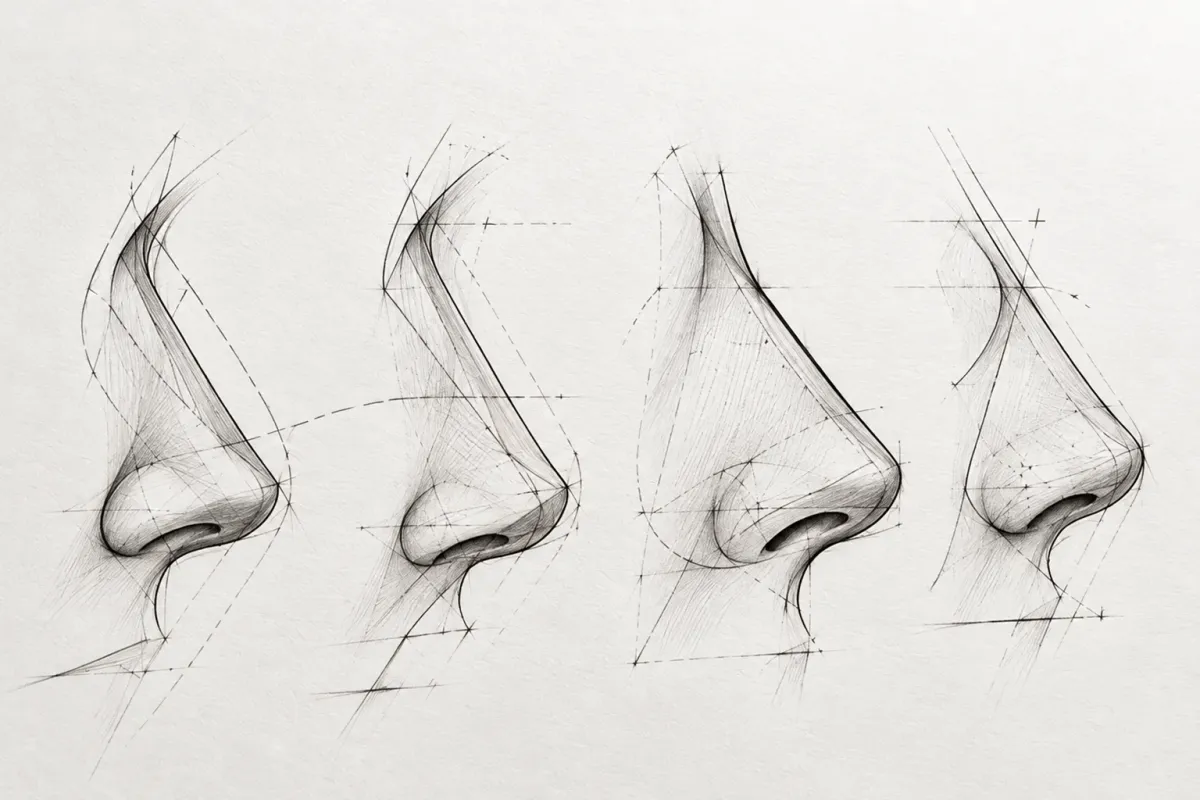
A good rhinoplasty should never draw attention to itself. It is not about creating the perfect nose, but one that feels right for the face, its proportions and individual anatomy. Why achieving a natural result is often the most demanding part of rhinoplasty.
Rhinoplasty is a procedure where millimetres can make a difference. Focusing consistently on one field means encountering new anatomical variations and complex situations every day. Why specialization, to us, is more than just a word.
After a first operation, the anatomy is no longer the same. Scar tissue, altered structures or a lack of available cartilage can make revision surgery significantly more complex. Why a second rhinoplasty is often not simply about correction — but reconstruction.
Not every revision requires additional cartilage. But when important structures have already been weakened or there is not enough cartilage left, the patient's own rib cartilage can provide new possibilities for reconstruction. When it makes sense — and when it doesn't.
No two faces age in exactly the same way — which is why there is no single right age for a facelift. What matters more is individual anatomy, changes in the facial tissues and personal expectations.
Few areas of facial surgery are currently surrounded by so many different terms. But the most talked-about technique is not automatically the right one. What matters is which structures need to be addressed — and which approach best suits the individual anatomy.
A younger-looking face is not simply a tighter face. Proportions, volume and the natural position of the tissues matter just as much as the skin itself. A good facelift should make you look refreshed — without changing your expression or identity.
Excessive tension, visible scars or a result that simply doesn't look natural — there are many reasons someone may consider revision surgery. At the same time, previously operated tissue makes surgery more demanding. What can be improved with a revision facelift — and where the limits lie.
Breast augmentation should not begin with choosing an implant size. The chest, existing breast tissue, skin quality and individual proportions all influence what can look balanced and natural. Why the right breast cannot be planned around a number alone.
It is one of the most common questions before breast augmentation — and there is no single answer that is right for everyone. Body shape, existing breast tissue and the desired result all influence implant placement. The right technique starts with the right indication.
Laser technology can target skin quality, pigmentation, unwanted hair or tattoos — but not every skin concern needs a laser. The right technology, the right indication and realistic expectations all matter. A closer look at the possibilities and limitations of modern laser treatments.
Filters, face apps and artificial intelligence are increasingly changing the way we imagine ourselves. But what works on a screen does not automatically work for a real face. Why modern aesthetics, to us, is not about following an ideal — but preserving individuality.