

Revision Facelift
Correcting or refining the results of previous facial surgery to restore natural contours, balance and a more harmonious appearance.
A revision facelift presents different requirements than a first facelift procedure. Tissue layers have already been dissected, scars have formed, and anatomical structures may have been altered or repositioned. The skin, the underlying tissue and the natural supporting structures of the face can also have been affected by the previous procedure.
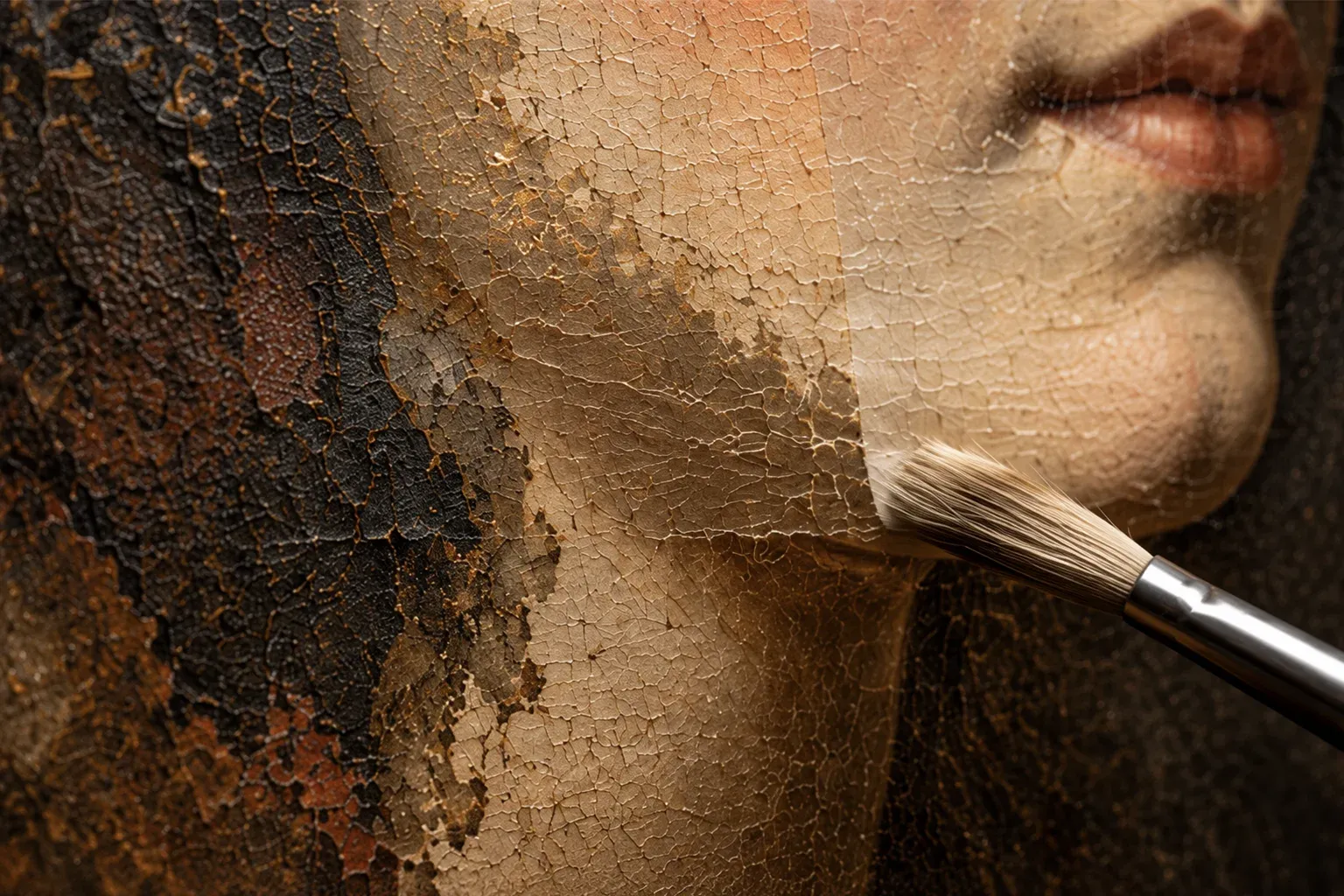
A revision therefore does not begin with an untreated face. It begins with what is already there.
The first step is to understand which structures have been changed, how the tissue is positioned today, and why the existing result does not meet expectations. Only from this does an individual treatment plan emerge.
At Clinic Selnau in Zürich, we plan revision facelifts with particular attention to natural contours, preserving personal expression, and handling previously operated structures in the most tissue-preserving way possible.
Our Approach
Every revision facelift is different.
The nature and extent of the previous operation, the technique used, existing scars, skin quality, tissue position and individual healing all shape today's starting point.
Even changes that appear similar from the outside can have different causes. An irregular jawline, for example, can result from remaining descended tissue, scar traction, volume changes, or uneven tension.
For this reason, a revision facelift begins with particularly careful analysis. It is not only about what bothers you about the current result. It is equally important to understand why this change occurred, and what anatomical possibilities exist for a further correction.
Form, Contours & Expression
Following a previous facelift, very different concerns can exist.
Some changes were already visible after the first operation. Others develop only over time, as tissue continues to age or the relationship between operated and non-operated areas shifts.
A revision facelift may be considered for changes including:
- Remaining or recurring jowls
- Insufficiently defined contours along the jawline
- Asymmetries following a previous operation
- Irregular or unnaturally taut tissue tension
- Areas that appear over-tightened
- Visible transitions between treated and untreated regions
- Displacement or irregularities of the soft tissue
- Changes in the cheek and midface area
- Recurring laxity of the face or neck
- Noticeable or unfavourably positioned scars
- Changes following several previous procedures
- A result that does not sit harmoniously with the rest of the face or with your personal expression
Not every irregularity following a facelift requires a further operation. An operated face continues to age as well, minor asymmetries and tissue changes are part of this process and cannot be entirely avoided.
What matters is therefore not simply whether a change is visible. What matters is whether a further operation can realistically be expected to offer meaningful improvement.
Planning & Analysis
Precise analysis is especially important in a revision facelift.
During consultation, we examine your face from different perspectives and assess the skin, soft tissue, scars, volume distribution and the position of the deeper tissue layers. The cheeks, midface, jawline and neck are considered together.
Where available, earlier photographs, surgical reports or information about the technique used can help build a clearer picture of the starting point.
The time elapsed is equally important. We consider how long ago the previous operation took place, how the result developed during healing, and which changes emerged only later.
Standardised photography supports this analysis and allows us to discuss the existing changes and possible treatment goals together.
In a revision, this is not about undoing the first operation. It is about understanding today's anatomical situation and, on that basis, assessing which changes are realistically possible.
The Procedure
There is no standardised technique for a revision facelift.
The surgical approach depends on which tissue layers were treated during the previous operation, how pronounced the scarring is, and which structures need to be corrected today.
Tissue that has already been operated on can be less mobile, and anatomical layers may be connected by scar tissue. A further dissection therefore requires particular care and precise knowledge of the altered anatomy.
Depending on the starting point, individual areas can be corrected in a targeted way, or deeper tissue layers can be remobilised and repositioned.
The SMAS and deeper structures, too, can form part of a revision. Which layer is treated, however, depends largely on the technique used in the previous operation and on the anatomical conditions present today.
In certain situations, a further SMAS-based dissection may make sense. In others, a deeper approach may be required. Terms such as Deep Plane facelift, SMAS facelift or mini-facelift therefore say relatively little on their own about which technique is actually suitable in a revision.
What matters is not applying a particular method again. What matters is understanding the anatomy as it has already been changed, and adapting the surgical approach accordingly.
Existing scars are also factored into the planning. Where possible, existing incision lines can be reused, or unfavourable scars can be corrected as part of the revision.
Reassessing Face and Neck
Face and neck continue to change together even after a previous operation.
An earlier facelift may have treated the face extensively while the neck was corrected less. Conversely, changes to the jawline or neck can develop again over time.
For this reason, in a revision facelift we do not consider only the area originally operated on. The cheeks, jawline, chin and neck are reassessed as a connected anatomical unit.
Where the changes mainly concern the neck, a Neck Lift may be the primary focus. In other cases, treatment of the neck can form part of a more comprehensive revision facelift.
If no previous facelift has been performed, you can find the underlying information on the different techniques and treatment approaches under Facelift.
Complementary Treatments
Not every change following a previous facial operation can be corrected through a revision facelift alone.
The eye area and upper face can show changes independently of the lower face. Depending on the starting point, an upper or lower eyelid lift, a brow lift or a forehead lift can form part of a broader treatment concept.
Volume distribution also plays an important role in previously operated faces. A fat transfer to the face can, in suitable cases, be used to restore volume in a targeted way and make transitions between different facial regions more harmonious.
Changes around the upper lip are only marginally influenced by a revision facelift. Where an independent anatomical change is the primary concern there, a lip lift can be assessed separately.
Not every additional procedure is necessary or advisable. In a revision in particular, restraint is an important part of planning.
Working With the Anatomy as It Is
A revision facelift is not a second first facelift.
Tissue layers have already been mobilised, supporting structures may have changed, and scar tissue affects the mobility of the different layers. Volume and skin tension, too, can have changed as a result of the previous operation. This starting point cannot be fully reset to its original state.
For this reason, revision does not automatically mean tightening more than before. Where a result appears over-corrected or unnaturally tight, the opposite may in fact be necessary. In other cases, the focus lies on repositioning descended tissue again, or restoring clearer contours. Sometimes the improvement lies not in a stronger correction, but in a better balance between the individual areas of the face.
A revision does not mean starting over. It means working precisely with the anatomy as it now is.
Healing & Results
Healing after a revision facelift can differ from healing after a first operation.
Tissue that has already been operated on responds individually to a further procedure. Scarring, altered tissue layers and the extent of the renewed dissection can all influence how pronounced swelling is and how quickly contours develop.
In the first weeks, swelling, bruising and a feeling of tightness can occur. As healing progresses, contours become clearer and the tissue gradually adapts to its new position.
Scars, too, continue to change over several months. Existing scars can be partially improved or repositioned as part of a revision. They will not, however, become completely invisible.
How long the result continues to develop depends on the starting point, the extent of the revision and individual tissue response. The natural ageing process continues even after a revision facelift.
The aim, therefore, is not to exactly recreate an earlier state. It is to develop, from the existing situation, as balanced a result as possible, one that fits naturally into the face.
Consultation
A revision facelift begins with understanding what has been done so far, and what concerns you about today's result.
During your consultation at Clinic Selnau in Zürich, we take time to discuss the previous procedures and the healing process to date. We assess the skin, scars, volume distribution and the position of the different tissue layers, as well as the cheeks, jawline and neck.
Where earlier photographs or surgical reports are available, these can help clarify the anatomical starting point and the changes already made.
On this basis, we assess which changes can realistically be corrected and which surgical approach makes sense. Equally important is the question of which structures are better left unchanged.
We discuss openly what limitations exist due to previously operated tissue, how a further operation can be planned, and what additional risks a revision carries.
Not every result following a facelift can be improved through a further operation. Careful consultation therefore also means advising against a revision where the potential benefit does not justify the additional risk.
The aim is not to undo the first operation. It is to understand today's anatomy and to develop a treatment plan that brings contours, proportions and personal expression into balance as effectively as possible.