

Lip Lift & Bullhorn Lift
Reducing the distance between the nose and upper lip to subtly elevate the lip and enhance its natural shape and visibility while respecting overall facial proportions.
The upper lip changes throughout life not only in volume. Its length, the visibility of the lip vermilion, and the relationship between the nose, upper lip and mouth can change as well.
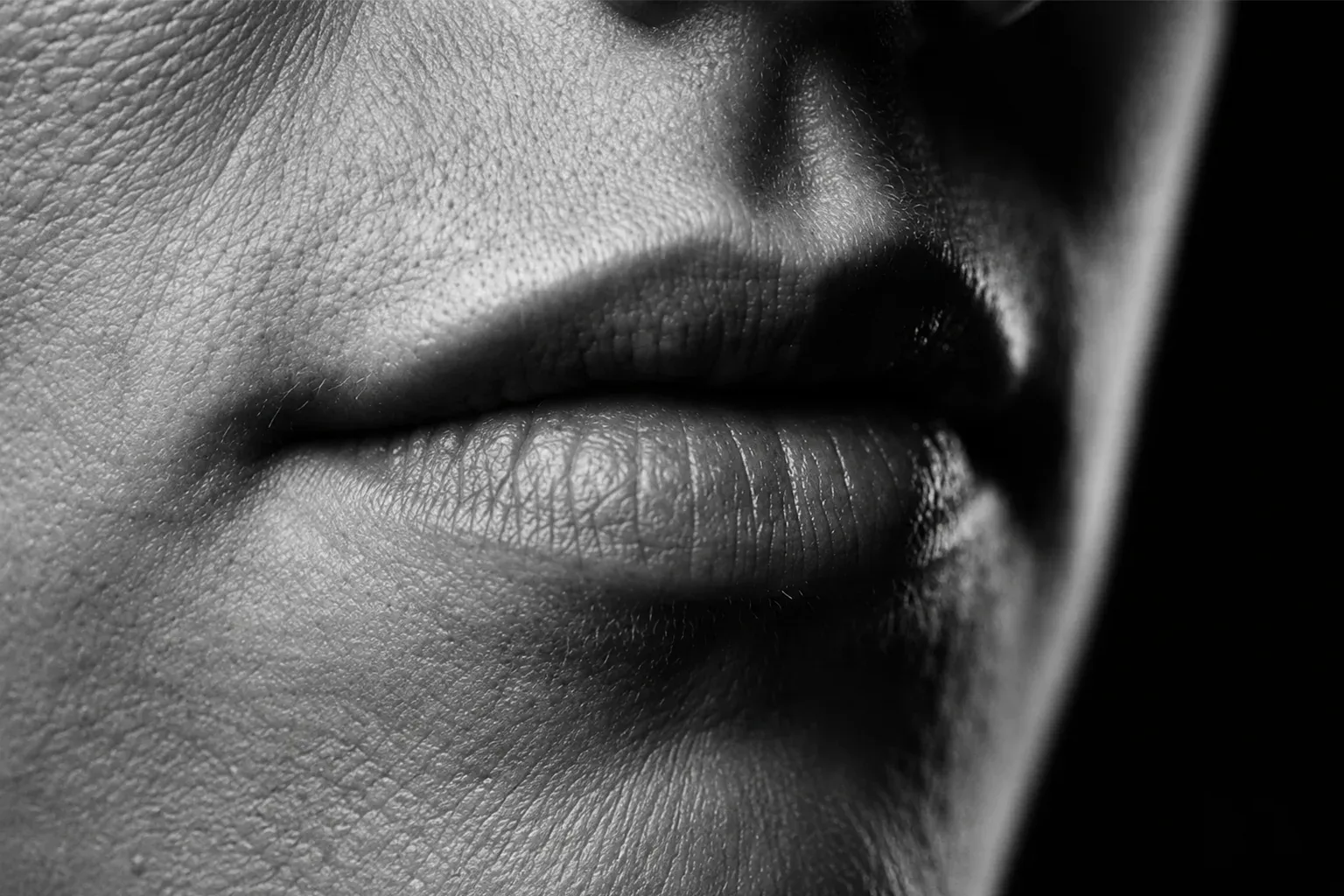
In particular, the distance between the base of the nose and the upper lip can appear longer. At the same time, less vermilion may be visible, and the upper lip can appear less present at rest or when smiling.
A lip lift addresses these anatomical proportions directly. Unlike a pure volume treatment, the shape of the upper lip is not changed by adding volume, but through a targeted shortening and redistribution of skin.
Depending on anatomy and treatment goal, different techniques are available. These include, in particular, the bullhorn lift beneath the nose and the direct lip lift at the transition between the skin and the vermilion.
At Clinic Selnau in Zürich, we plan lip lifts with particular attention to the relationship between the nose, philtrum, vermilion and the natural proportions of the entire face.
Our Approach
Every lip is different.
Lip shape, philtrum length, visible vermilion, tooth exposure, the base of the nose, and the proportions of the lower face together determine how the upper lip is perceived.
For this reason, planning a lip lift does not begin with an ideal lip shape. Instead, we look at the relationship between the nose and the upper lip, how much vermilion is visible, and how the lip behaves at rest and when smiling.
The shape of the nose also plays an important role. The base of the nose and the upper lip are directly connected, so changes in this area should never be assessed in isolation.
The aim is not the shortest possible upper lip. It is to change its proportions so that it fits naturally with the rest of the face.
Length, Shape & Visibility
The appearance of the upper lip is not determined by volume alone.
Also decisive are the length of the skin portion of the lip, the shape of the vermilion, the Cupid's bow, and the relationship between the upper lip and visible teeth.
A lip lift may be considered for changes or concerns including:
- An increased distance between the nose and upper lip
- Limited visibility of the vermilion
- An upper lip that appears rolled inward
- Age-related lengthening of the skin portion of the lip
- Limited visibility of the upper lip at rest
- A wish for a more defined Cupid's bow
- Asymmetries of the upper lip
- A wish for a more lasting change to lip proportions without primarily adding volume
Not every narrow or less visible upper lip, however, is automatically suited to a lip lift. Volume, lip length and lip shape are different anatomical characteristics. For this reason, it must first be clarified which of these should actually be changed.
Planning & Analysis
A careful analysis of facial proportions is an essential part of planning.
During consultation, we examine your upper lip both at rest and when smiling. We assess the distance between the nose and vermilion, the shape of the Cupid's bow, the visible height of the upper lip, and tooth exposure.
At the same time, we consider the nose, chin and the entire lower face. The ideal length of the upper lip cannot be determined by a single measurement, but results from its relationship to the surrounding structures.
Existing asymmetries are also taken into account.
Standardised photography supports this analysis and helps us discuss the starting point and treatment goal together.
On this basis, we determine whether a lip lift makes sense and which technique suits your individual anatomy.
The Procedure
In a lip lift, a precisely defined portion of skin is removed to change the position and visibility of the upper lip.
Where this skin is removed depends on the chosen technique.
In the classic bullhorn lift, skin is removed directly beneath the nose. This can shorten the distance between the base of the nose and the upper lip, and subtly elevate the lip.
In the direct lip lift, by contrast, skin is removed directly at the transition between the skin and the vermilion. This allows the contour of the upper lip to be influenced more directly.
Both techniques pursue similar, but not identical, goals and leave scars in different locations. Which technique makes sense depends on lip shape, skin length, the desired change, and individual scarring tendency.
Bullhorn Lift
The bullhorn lift, also called the subnasal lip lift, is the most common form of lip lift.
The incision runs directly beneath the base of the nose, following its natural contour. Its shape resembles the curved silhouette of bull's horns, which gives the technique its name.
Through this approach, an individually determined amount of skin is removed. This shortens the distance between the nose and upper lip, and can make the vermilion more visible.
The change affects not only the length of the skin portion of the lip. The shape of the Cupid's bow and the visibility of the upper lip can also be influenced.
How much the upper lip is lifted must be planned carefully. Excessive shortening can alter natural proportions and is only reversible to a limited extent.
The scar sits directly beneath the nose. It is planned to run as inconspicuously as possible along the natural transitions of the nasal base, but, like any surgical scar, remains present.
Direct Lip Lift
In the direct lip lift, a narrow strip of skin is removed directly above the vermilion.
The incision follows the transition between the lighter skin of the upper lip and the vermilion. This allows the contour of the upper lip to be lifted very directly, and the visible height of the vermilion to be increased. Depending on the plan, individual areas, such as the Cupid's bow, can also be influenced more precisely.
The key difference from the bullhorn lift lies in the position of the scar. While the bullhorn lift's scar sits beneath the nose, the direct lip lift's scar runs directly along the lip contour. It therefore sits in a more visible area of the face.
For this reason, this technique is not the first choice for every starting point. It can, however, be appropriate in selected anatomical situations where a direct change to the lip contour is the primary goal.
Which Technique Suits Which Lip?
The bullhorn lift and the direct lip lift are not different quality levels.
They change the upper lip in different ways and place the scar at different anatomical transitions.
Where the main goal is shortening an increased distance between the nose and upper lip, a bullhorn lift is often the more obvious approach.
Where a targeted change to the visible lip contour is the primary concern, a direct lip lift can be appropriate in selected cases.
What matters is the existing lip length, the shape of the vermilion, the base of the nose, tooth exposure, skin quality, and the desired treatment goal. It is not the technique that determines the ideal lip. The existing anatomy determines which technique makes sense.
Lip Lift or Volume?
A lip lift and a volume treatment pursue different goals.
Dermal fillers can add volume and change the shape of individual areas of the lip. The length of the skin between the nose and upper lip, however, is not shortened by this.
A lip lift, by contrast, changes the anatomical position and visibility of the upper lip, without primarily adding volume.
For some lips, missing volume is the main concern. For others, the length of the skin portion of the lip is more decisive. Both can also exist at the same time.
The decision should therefore not be based on which treatment is generally preferred. What matters is which anatomical characteristic should actually be changed.
Nose and Upper Lip as One Unit
The nose and upper lip are directly connected anatomically.
The shape of the nasal base, the position of the nostrils, and the angle between the nose and upper lip all influence how long the upper lip is perceived to be.
This is especially relevant where a rhinoplasty has already been performed or is being planned. Changes to the nasal tip or base can visually influence the relationship between the nose and upper lip. For this reason, both regions should be considered together during planning, even if only one of them is operated on.
This relationship is particularly important for a bullhorn lift, since its incision sits directly beneath the base of the nose.
The aim is a harmonious transition between the nose, philtrum and upper lip, not the isolated alteration of a single area.
Complementary Treatments
The upper lip is part of overall facial proportion.
Where volume changes exist elsewhere in the face alongside lip length, dermal fillers or a fat transfer to the face can be assessed independently.
Age-related changes to the mid and lower face, however, are not corrected by a lip lift. Where tissue structures have descended, a facelift, or, for corresponding changes to the neck, a neck lift, pursue different treatment goals.
Regenerative methods, too, can support skin and tissue quality. They do not, however, change the anatomical length of the upper lip. You can find more on this under Regenerative Facial Rejuvenation.
Combining different treatments is not automatically necessary. What matters is which anatomical changes are actually present, and which of these should be treated.
Proportion, Not Volume
A visible upper lip does not automatically mean a voluminous upper lip.
Lip shape results from the interplay of volume, contour, length and position. For this reason, an upper lip can appear less visible even where sufficient volume is present. In this situation, additional volume would not address the actual anatomical cause.
A lip lift takes a different approach. It changes the relationship between the nose and upper lip, and can thereby make more vermilion visible, without primarily filling the lip.
The aim is not the largest or most striking upper lip possible. It is to balance length, shape and visibility so that the lip belongs naturally to the face.
Healing & Results
Swelling is normal in the first period after a lip lift.
Particularly in the first few days, the upper lip can appear noticeably swollen, and its mobility can temporarily be altered. The early appearance therefore does not yet reflect the later result.
As healing progresses, swelling decreases and the upper lip gradually settles into its new position.
The scar, too, develops over several months. With the bullhorn lift, it sits directly beneath the nose; with the direct lip lift, along the transition between skin and vermilion. Scars can initially appear red or firm, before becoming increasingly inconspicuous.
The quality of a scar, however, does not depend on the incision alone. Individual wound healing, skin characteristics and scarring tendency also play a role.
The result of a lip lift is designed to be long-lasting, while the natural ageing process of skin and tissue continues at the same time.
Consultation
A lip lift begins with the question of what you would actually like to change about your upper lip.
During your consultation at Clinic Selnau in Zürich, we assess the distance between the nose and upper lip, lip shape, visible vermilion, the Cupid's bow, and tooth exposure. At the same time, we consider the nose, chin and the proportions of the entire face.
We discuss whether the desired change can actually be achieved by shortening the skin portion of the lip, or whether volume, contour, or other anatomical factors are the primary concern.
On this basis, we assess whether a lip lift makes sense, and whether a bullhorn lift or a direct lip lift better suits your individual starting point.
A particular part of the consultation concerns scar position. Since the possible approaches differ significantly in location, their course, visibility and individual advantages and disadvantages are discussed in detail before surgery.
We discuss openly what result can realistically be expected, how the healing phase unfolds, and what limitations and risks need to be considered.
The aim is not to create a particular lip shape. It is to change the proportion between the nose and upper lip so that more of your natural lip becomes visible, while it continues to belong to your face.